
Ardmore, PA – October 14, 2026 – PRESSADVANTAGE –
Evolve Collision Centers is publishing consumer guidance explaining why replacing a windshield can also require calibration of a forward-facing Advanced Driver Assistance Systems camera. The October resource focuses specifically on a point that can be confusing on repair estimates: windshield replacement, diagnostic scanning, and camera calibration are separate operations, even when they appear as part of the same repair.
Many newer vehicles use cameras positioned near the upper center of the windshield to support driver-assistance functions. Depending on the vehicle and equipment, these cameras may contribute to lane-related assistance, forward collision warnings, automatic emergency braking, traffic sign recognition, or other features.
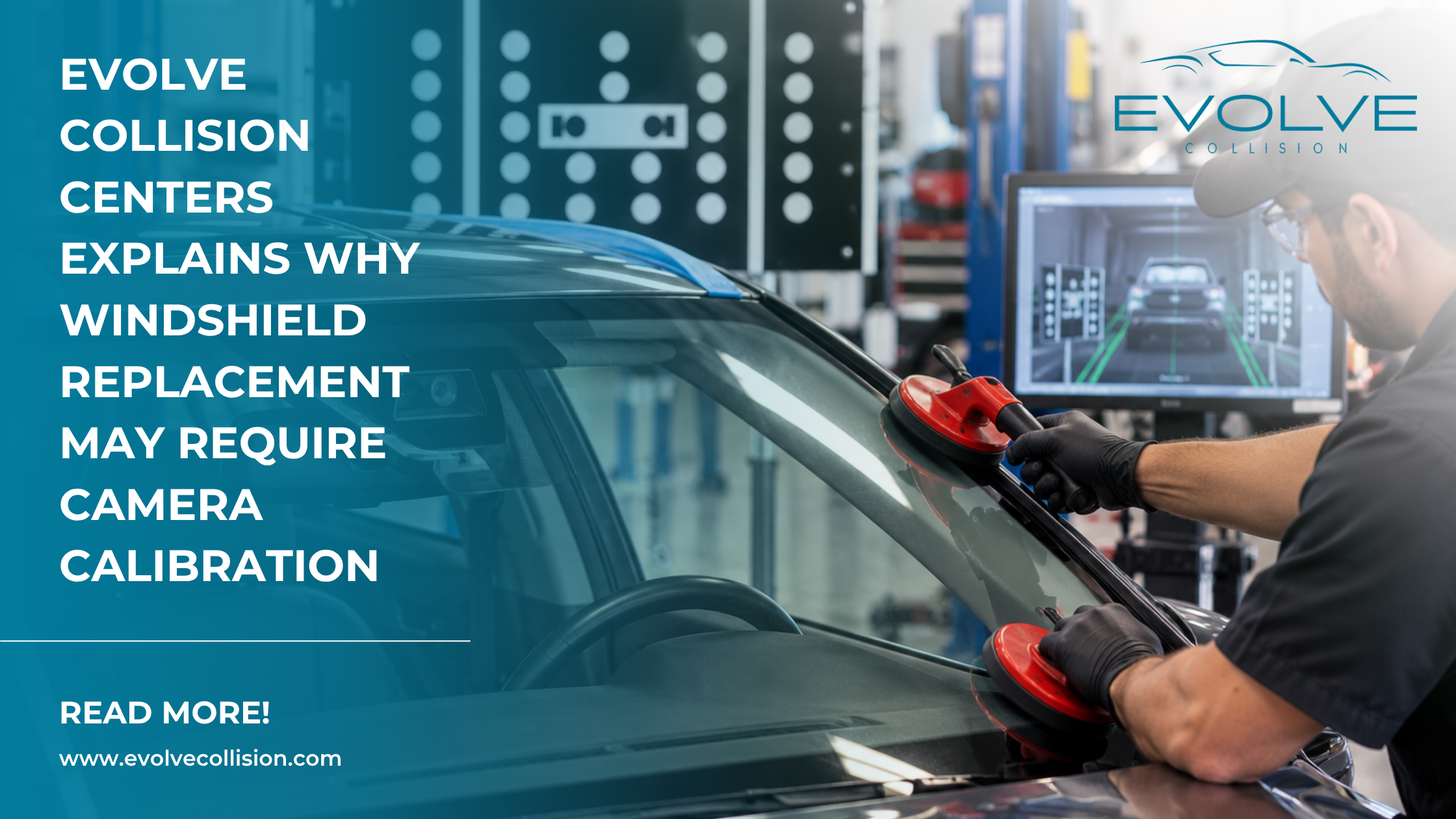
The connection between the camera and windshield helps explain why calibration can become relevant even when the camera itself was not visibly damaged.
On vehicles equipped with a forward-facing camera, the windshield provides the viewing area through which the camera observes conditions ahead. The camera assembly can also have a defined relationship to the glass and vehicle. Removing and replacing the windshield can therefore lead to a calibration requirement when specified by the applicable vehicle procedure.
Evolve Collision Centers provides glass work for vehicles requiring windshield and other automotive glass services. The company’s new consumer resource is intended to clarify why an estimate can contain both glass replacement and a separate ADAS calibration operation.
The distinction is straightforward. Windshield replacement addresses the damaged glass. Camera calibration addresses the specified reference associated with the applicable electronic system. Although the two procedures can be connected, they perform different functions.
Correct vehicle identification is an important part of determining what applies. Driver-assistance equipment can vary by model year, trim level, option package, and vehicle configuration. Two visually similar vehicles may therefore have different windshield and camera requirements.
The replacement glass must also correspond to the vehicle and its equipment. Windshield configurations can differ when cameras or other technology are incorporated around the glass, making identification of the appropriate windshield part of repair planning.
Once the windshield is installed, the required calibration method can also vary.
Some vehicles use static calibration. This generally involves keeping the vehicle stationary while specified targets, patterns, measurements, or equipment are positioned according to the applicable procedure.
Other vehicles use dynamic calibration, which can require driving under specified conditions while equipment communicates with the system. Speed, lane markings, traffic, weather, and other conditions may be relevant to completing the procedure. Some vehicles or repair situations can involve more than one calibration step.
Diagnostic scanning is another operation drivers may see on repair documentation, but it should not be confused with calibration.
A diagnostic scan communicates with vehicle modules and can provide information such as diagnostic trouble codes and system status. Calibration addresses specified reference or alignment requirements for the applicable camera or other ADAS component. A repair can therefore involve both procedures without the operations being duplicates.
Evolve Collision Centers provides scanning and calibration services for this technology-related portion of applicable repairs.
Repair sequence can also matter. The windshield generally needs to be installed before a calibration intended to establish the camera’s relationship to the repaired vehicle is completed. Depending on the applicable procedure, technicians may also need to account for prerequisites involving vehicle condition or setup before calibration begins.
When windshield damage occurs as part of a larger accident, the glass may represent only one portion of the repair.
An impact can also involve surrounding body areas or other components. In those situations, the repair plan can establish the sequence for body work, glass installation, diagnostic procedures, and calibration so the electronic procedure reflects the vehicle after applicable physical repairs have been completed.
Evolve Collision Centers’ collision repair services address that broader process when windshield damage occurs alongside other accident-related conditions.
Camera calibration can also be relevant when a windshield is replaced for reasons unrelated to a collision. A large crack or stone impact can require replacement without accompanying body damage. If the vehicle uses a windshield-associated camera and its applicable procedure specifies calibration after replacement, the electronic procedure can still apply.
This helps explain why windshield replacement estimates can differ from one vehicle to another. A vehicle without forward-facing camera equipment may have different requirements from one equipped with ADAS technology.
The presence or absence of a dashboard warning is not necessarily the deciding factor either. A calibration requirement can result from the repair procedure itself rather than an obvious warning indicator. Similarly, a camera remaining physically attached after glass replacement does not by itself establish whether calibration applies.
Repair documentation can help owners understand what was performed. When applicable, records can identify the windshield work along with associated scanning or calibration procedures. Keeping these records with other repair paperwork can provide a clearer history of the work completed on the vehicle.
The October resource ultimately gives drivers a simpler way to read a modern windshield replacement estimate. Glass replacement restores the damaged windshield. Diagnostic scanning communicates with applicable electronic modules. Camera calibration addresses the specified reference for the relevant driver-assistance system.
By separating these three operations, Evolve Collision Centers’ new guidance explains why ADAS-equipped vehicles can require additional steps that are not part of the physical glass replacement itself. The appropriate procedure is established from the vehicle’s equipment and applicable repair information rather than from the appearance of the camera or windshield alone.
Evolve Collision Centers is located at 2560 Haverford Rd, Ardmore, PA 19003, United States and provides collision repair, automotive glass work, scanning, calibration, and related repair services.
###
For more information about Evolve Collision Centers, contact the company here:
Evolve Collision Centers
Butch Cantz
(267) 692-6699
bcantz@evolvecollision.com
2560 Haverford Rd, Ardmore, PA 19003


