Why Waterproofing Your Crawl space Can Transform Your Indoor Air Quality and Home Health
Killingworth, United States – December 15, 2025 / Budget Dry Basement Waterproofing /
Have you ever considered the role your home’s crawl space plays in maintaining a healthier living environment? It’s easy to overlook, but that small, enclosed area beneath your property can have a significant impact on your indoor air quality and overall health. When left unattended, crawl spaces can become damp breeding grounds for mold, pests, and structural damage. By investing in crawl space waterproofing, you’re not just fortifying your home’s structure, but also stepping up your fight against allergens and disease-causing molds. So, are you ready to explore how you can protect your home and health with effective crawl space waterproofing?
Key Takeaways
- Crawl space waterproofing prevents mold growth, enhancing air quality and reducing respiratory issues.
- Waterproofing creates a barrier against pests attracted to damp conditions, improving home safety.
- The process helps maintain structural integrity, protecting the home’s foundation from water damage.
- Regular waterproofing maintenance, such as inspections and dehumidification, prevents moisture accumulation and resultant health risks.
- Professional waterproofing services can identify and rectify complex issues, ensuring a healthier living environment.
Understanding Crawl Space Waterproofing
If you’ve ever dealt with moisture in your home, you already understand how important crawl space waterproofing can be. It’s not just a buzzword contractors use; it’s a crucial step in protecting both your home and your health. Crawl space waterproofing involves creating a barrier that prevents water from entering this enclosed area beneath your home. This can be done through several methods, including installing a waterproof membrane, adding a French drain, or setting up a sump pump. It’s far more involved than simply applying waterproof paint. The right approach depends on factors like your home’s age, its construction, and environmental risks such as groundwater, rain runoff, or condensation.
The Importance of a Dry Crawl Space
You might be wondering why a dry crawl space is so important.
Let’s start by looking at the potential dangers of a wet crawl space.
Then, we’ll explore the benefits of crawl space waterproofing and explain some methods for achieving it.
Dangers of Wet Crawl Spaces
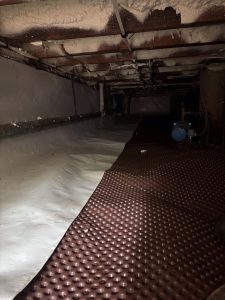 Often, homeowners overlook the potential hazards of a wet crawl space, not realizing the significant role it plays in maintaining a healthy home environment.
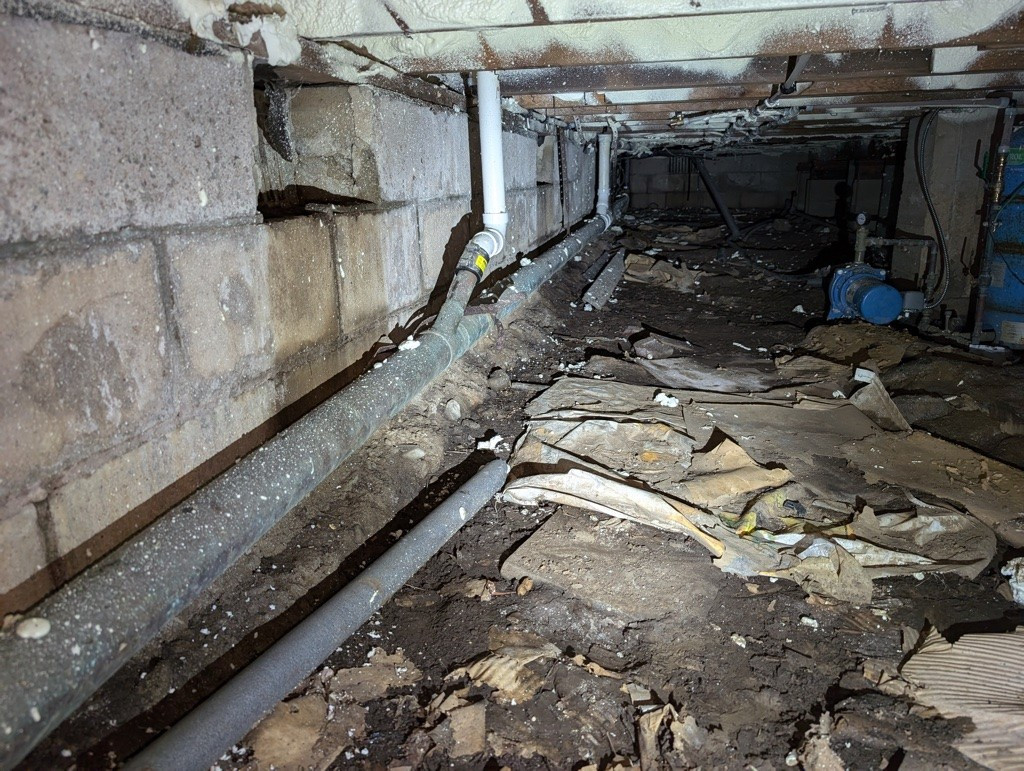
A damp crawl space isn’t just a minor inconvenience; it can pose serious threats to both your house and your health.
Let’s explore the specifics. Here are some dangers associated with wet crawl spaces:
- Structural Damage: Excess moisture can cause wood to rot, compromising your home’s structural integrity. Over time, you’ll notice sagging floors, and in the worst-case scenario, it can lead to substantial, expensive repairs.
- Mold and Mildew: These thrive in damp environments, and your wet crawl space is the perfect breeding ground. Mold spores can circulate throughout your home, causing allergic reactions and respiratory issues.
- Pests: Damp crawl spaces attract pests like rodents and insects, which can cause damage and spread diseases.
- Decreased Energy Efficiency: Moisture in your crawl space can lead to higher humidity levels in your home, causing your HVAC system to work harder and increase your energy bills.
Benefits of Crawl Space Waterproofing
Investing in crawl space waterproofing presents multiple advantages for your home.
First off, it’s a huge step towards maintaining a healthy living environment. A dry crawl space means less mold and mildew, which are notorious for causing respiratory issues. By waterproofing, you’re fundamentally promoting better air quality in your home.
Secondly, it’s a cost-saving move in the long run. Frequent crawl space repairs and replacements due to water damage can be pretty hefty on your pockets. Waterproofing eliminates these unnecessary costs.
Most importantly, waterproofing your crawl space improves the structural integrity of your home. Water seepage can weaken your home’s foundation over time, leading to cracks and instability. By keeping your crawl space dry, you’re guaranteeing your home’s longevity.
Finally, a dry crawl space means fewer pests. Damp spaces are a breeding ground for insects and rodents. By keeping it dry, you’re making your home less inviting to these unwanted guests.
In a nutshell, crawl space waterproofing is an investment you won’t regret. It not only guarantees a healthier living environment but also safeguards the very foundation of your home.
Waterproofing Methods Explained
Understanding various waterproofing methods and how they contribute to a dry crawl space is an important aspect of home maintenance.
You’ll want to keep your crawl space dry to prevent mold growth, wood rot, and pest infestation. By applying the right waterproofing method, you can create a healthier living environment for your family.
Here are four popular waterproofing methods to evaluate:
- Interior Waterproofing: This method involves using sealants and coatings applied to the interior surface of your crawl space.
It’s the least expensive but mightn’t be enough to handle severe water intrusion.
- Exterior Waterproofing: This involves excavating the soil around your home to install a waterproof barrier.
It’s the most effective but also the most costly.
- Drainage System: It incorporates a series of pipes and drains to redirect water away from your home.
- Dehumidification: This method uses a dehumidifier to control moisture levels in your crawl space, which is effective in areas with high humidity.
Health Risks of Damp Crawl Spaces
You mightn’t realize it, but a damp crawl space can pose serious health risks.
Not only can it lead to structural damage, but it’s also a breeding ground for mold and allergens.
Let’s discuss how these risks affect your wellbeing and your home’s stability.
Mold and Allergen Exposure
Damp crawl spaces can rapidly become a breeding ground for mold and allergens, posing significant health risks.
You mightn’t realize it, but the air in your home can be contaminated by these harmful elements. Over time, you could be exposing yourself and your family to a variety of harmful health effects.
Exposure to mold and allergens can lead to:
- Respiratory issues: Continuous inhalation of mold spores can cause respiratory problems, including chronic coughing and wheezing.
- Allergic reactions: Some people have strong reactions to mold, resulting in itchy skin, red eyes, and a runny nose.
- Asthma attacks: For asthma sufferers, mold spores can trigger severe attacks.
- Infections: Prolonged exposure to mold can lead to serious health conditions, such as lung infections.
To protect yourself and your loved ones, it’s essential to waterproof your crawl space.
This won’t just make your home safer and healthier, but it’ll also enhance your comfort and peace of mind.
Don’t wait until it’s too late — take action today and safeguard your health and wellbeing from the dangers of mold and allergen exposure.
Structural Damage Risks
Beyond the threats to your health, a damp crawl space also poses serious risks to your home’s structure. You mightn’t realize it, but that persistent dampness you’re ignoring could be quietly eating away at your home’s foundation.
Water is a powerful force that can infiltrate porous materials, like wood and concrete, causing them to weaken and eventually crumble. In your crawl space, this could mean the slow but steady decay of wooden beams and joists that support your home.
Over time, this can lead to sagging floors, cracked walls, and in worst cases, significant structural failure.
Furthermore, damp environments are a breeding ground for pests such as termites and carpenter ants that feast on damp wood, causing further damage.
How Moisture Invades Your Crawl Space
Creeping silently, almost imperceptibly, moisture is the unseen invader of your crawl space. It can seep into your home’s foundations, causing untold harm before you’re even aware of its presence.
Now, you might be wondering, how does this silent foe find its way into your crawl space?
There are four main ways moisture can infiltrate:
- Condensation: This is when warm, moist air comes into contact with cold surfaces in your crawl space. The temperature difference causes the water in the air to condense into droplets, leading to dampness.
- Leaks: Any cracks or holes in your crawl space walls, or around pipes and windows, can allow water to trickle in, especially during rainy seasons.
- Groundwater: If your crawl space is below ground level, groundwater can seep in, particularly after heavy rainfall or snowmelt.
- Humidity: High outdoor humidity can easily result in increased crawl space moisture, especially in warmer months.
Understanding how moisture invades your crawl space is the first step to safeguarding your home.
In the next section, we’ll explore solutions to combat this insidious foe.
But remember, moisture isn’t an enemy you can ignore; it’s a battle you must continuously fight to maintain a healthy living environment.
Professional vs. DIY Waterproofing
So, you’ve learned about the different waterproofing methods, but who’s going to do the work? Should you roll up your sleeves and do it yourself, or should you hire a professional? The answer depends largely on your situation.
For simple projects, a DIY approach might be sufficient. You can save money and take pride in a job well done. However, there are several factors to evaluate:
- Knowledge and Experience: Professionals have the training and experience to handle complex tasks effectively. They can identify potential problems you might overlook.
- Time: Waterproofing can be a time-consuming task. If you’re busy, hiring a professional could save you time.
- Equipment: Some waterproofing techniques require special tools. Professionals have these tools on hand, but you might need to buy or rent them.
- Quality Assurance: Professionals typically guarantee their work. If something goes wrong, they’ll fix it at no extra cost.
On the other hand, hiring a professional can be expensive. And not all professionals deliver the same quality of work. It’s important to do your homework, get multiple quotes, and check references before making a decision.
Ultimately, the choice between DIY and professional waterproofing depends on your specific circumstances and comfort level.
Cost Breakdown of Waterproofing
Let’s now take a look at the cost breakdown of waterproofing.
It’s important to evaluate initial waterproofing expenses, long-term maintenance costs, and potential savings benefits.
Understanding these will allow you to make an informed decision on whether to go the DIY route or hire a professional.
Initial Waterproofing Expenses
Investing in crawl space waterproofing can seem costly initially, but it’s a prudent move to prevent future water damage. You might be wondering, “How much will it set me back?” The answer, as you might expect, varies depending on several factors.
Your initial expenses will be determined by:
- The size of your crawl space: Larger spaces demand more materials and manpower, subsequently raising the cost.
- The degree of moisture problem: If your crawlspace is already suffering from severe water damage, the cost of remedying it will be higher.
- The waterproofing method you choose: Options range from simple sealants to complex drainage systems. Each comes with its own price tag.
- Your location: Waterproofing services can cost more in certain areas due to differences in labor costs, material availability, and local regulations.
Long-term Maintenance Costs
 While the initial waterproofing costs might seem intimidating, it’s equally important to contemplate the long-term maintenance expenses. You see, without waterproofing, your crawl space is susceptible to water damage, mold growth, and structural issues. These problems aren’t just a nuisance; they’re costly to fix, and they tend to reoccur if not properly addressed.
Now, let’s break down the maintenance costs. Regular inspections, which are essential to catch potential issues early, aren’t free. You’re looking at around $100-$200 per visit, depending on your region and the complexity of your crawl space.
Then there’s the cost of ongoing treatments to prevent mold and pests, which can run between $500 to $1,000 annually. Factor in potential repair costs for water damage or structural issues, and you’re looking at several thousands of dollars over the years.
On the other hand, a well-done waterproofing job greatly reduces these costs. Yes, you’ll still need regular inspections, but they’re likely to be less frequent and find fewer issues.
And the costs of treatments and repairs? Those can drop considerably. So, while the upfront cost of crawl space waterproofing might give you pause, consider the long-term maintenance savings you might be missing out on.
Potential Savings Benefits
A significant number of homeowners overlook the potential savings benefits associated with crawlspace waterproofing.
But, you shouldn’t fall into this group. You may think waterproofing is an unnecessary expense, but it’s worth considering the long-term financial benefits.
Waterproofing your crawl space can save you money in several ways:
- Preventative Measures: By waterproofing, you’re preventing potential issues like mold, wood rot, and structural damage. These problems can be costly to fix, but you’ll avoid them with proper waterproofing.
- Energy Efficiency: A waterproofed crawl space can improve your home’s insulation, reducing your heating and cooling costs.
- Increased Home Value: A waterproofed crawl space increases your home’s value. It’s an attractive feature for potential buyers, showing that you’ve taken good care of your property.
- Avoidance of Health-related Expenses: Damp crawl spaces can lead to health issues, such as respiratory problems. Waterproofing eliminates this risk, saving you potential medical expenses.
Maintenance Tips Post-Waterproofing
Once your crawl space is waterproofed, it’s important to keep up with regular maintenance to guarantee the longevity of your investment.
You’ve put in the effort and expense to protect your home, so don’t let that go to waste.
First, make certain to clean your gutters and downspouts regularly. It’s a simple task that can prevent water buildup around your home’s foundation.
Next, maintain a routine of inspecting your crawl space. Look for any signs of moisture or water damage, such as mold or mildew. If you spot these, address it promptly to prevent further issues.
It’s also vital to check your sump pump frequently if you have one. Confirm it’s working properly and clear any debris that could interfere with its operation.
Signs Your Crawl Space Needs Attention
Seven telltale signs indicate your crawl space might be crying out for some TLC. You may not think about it often, but this hidden area can greatly impact your home’s health and safety.
Start by checking for a musty odor. It’s a clear sign of mold or mildew, resulting from moisture issues. Dampness can be another clue. If your crawl space isn’t dry, something’s wrong.
Next, consider the following:
- Unwanted Pests – Bugs, rodents, or other critters lurking around indicate a lack of proper sealing.
- Cold Floors – If your floors are unusually cold, poor insulation in your crawl space could be the culprit.
- High Energy Bills – A crawl space in disrepair can cause heating and cooling inefficiencies, leading to high energy costs.
- Structural Problems – Sagging floors, cracks in walls, or doors sticking are signs of potential crawl space issues.
Ignoring these signs can lead to more considerable problems down the line. It’s not just about your home’s structural integrity; it’s about creating a healthier living environment.
Address these issues promptly to keep your crawl space and your home in top shape.

Contact Information:
Budget Dry Basement Waterproofing
158 Route 81
Killingworth, CT 06419
United States
Chris Conti
(203) 421-8560
https://budgetdry.com/


