Paintless Dent Repair vs. Traditional Methods: Which is Right for Your Vehicle?
Covina, United States – December 1, 2025 / VMS Auto Collision Center /
Covina, CA – VMS Auto Collision Center in Covina is helping drivers make better decisions about vehicle dent repairs by explaining the differences between paintless dent repair (PDR) and traditional bodywork. Both methods serve different needs, and selecting the right one depends on damage depth, paint condition, and panel access. The team at VMS Auto Collision Center emphasizes that not all dents require sanding and repainting. Likewise, some damage types go beyond the capabilities of paintless techniques and need full refinishing to restore structure, shape, and appearance.

Comparing Common Dent Repair Techniques
PDR is a non-invasive process that reshapes metal panels from behind using specialized tools. It preserves the original factory finish and avoids repainting. In contrast, traditional repair involves sanding, filling, priming, and repainting to restore damaged surfaces, especially when the paint is cracked or the dent is deep. VMS Auto Collision Center provides both services and bases its repair recommendations on each vehicle’s condition, not shop convenience.
When Paintless Dent Repair Makes Sense
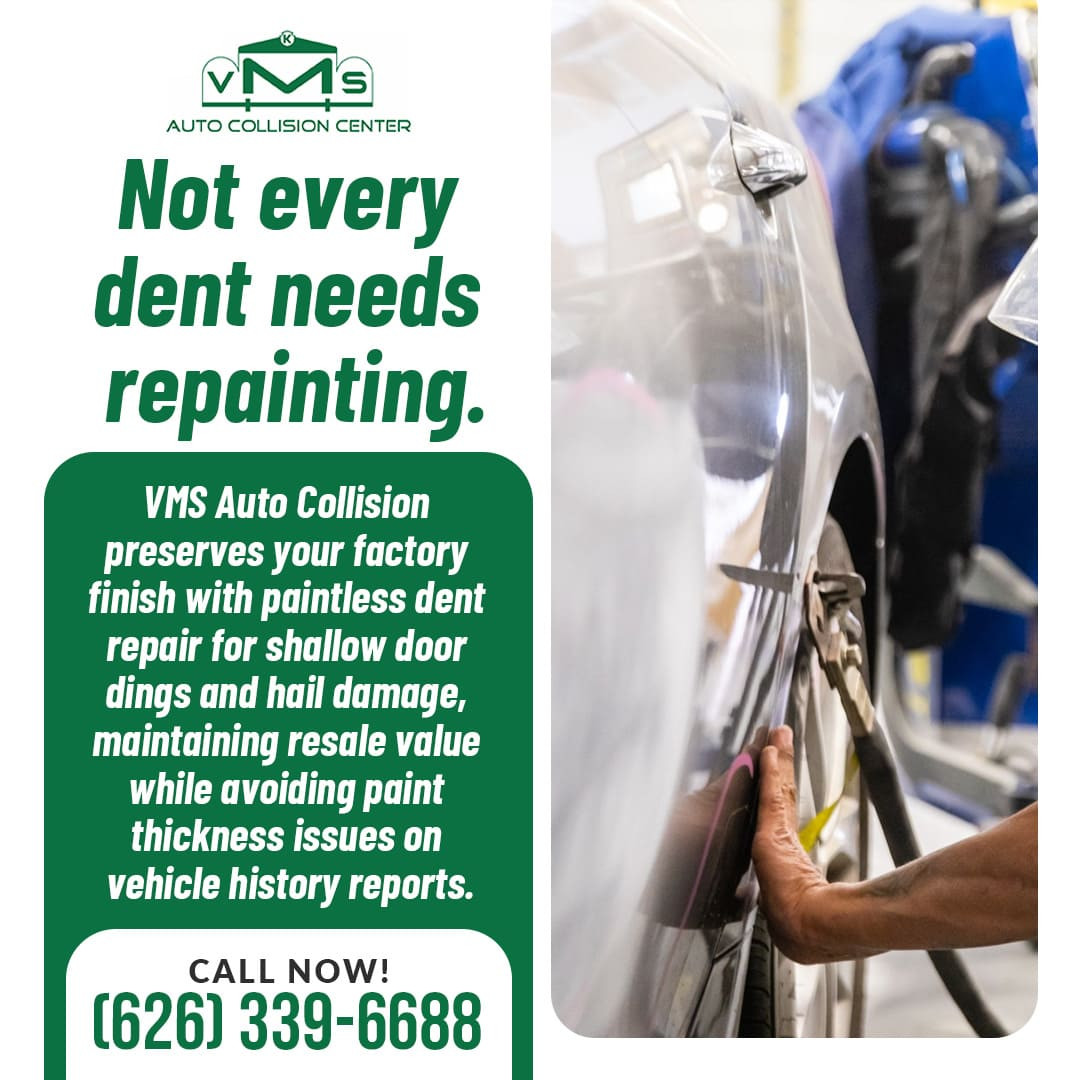
PDR works well for shallow, rounded dents with intact paint, such as door dings or hail damage. This method is often faster, typically completed within a day, and helps maintain resale value because the original paint remains untouched. It also avoids paint thickness issues that could trigger vehicle history reports.
The shop uses reflective light boards and digital measurement tools to guide precise metal reshaping. Common areas for PDR include doors, hoods, trunks, and accessible quarter panels. However, areas near reinforced edges or structural seams may not qualify.
When Traditional Repairs Are the Right Choice
Deep dents, sharp creases, or damage involving cracked or chipped paint call for traditional dent repair. This process includes reshaping the metal, applying body filler, sanding, priming, and using color-matched paint in a controlled booth to achieve a smooth and durable finish.
Vehicles with prior repairs, aged clear coats, or previous paintwork may not qualify for PDR. Traditional repairs allow technicians to work on a wider range of damage types and restore original contours even in structurally complex areas.
Factors That Influence Repair Method Selection
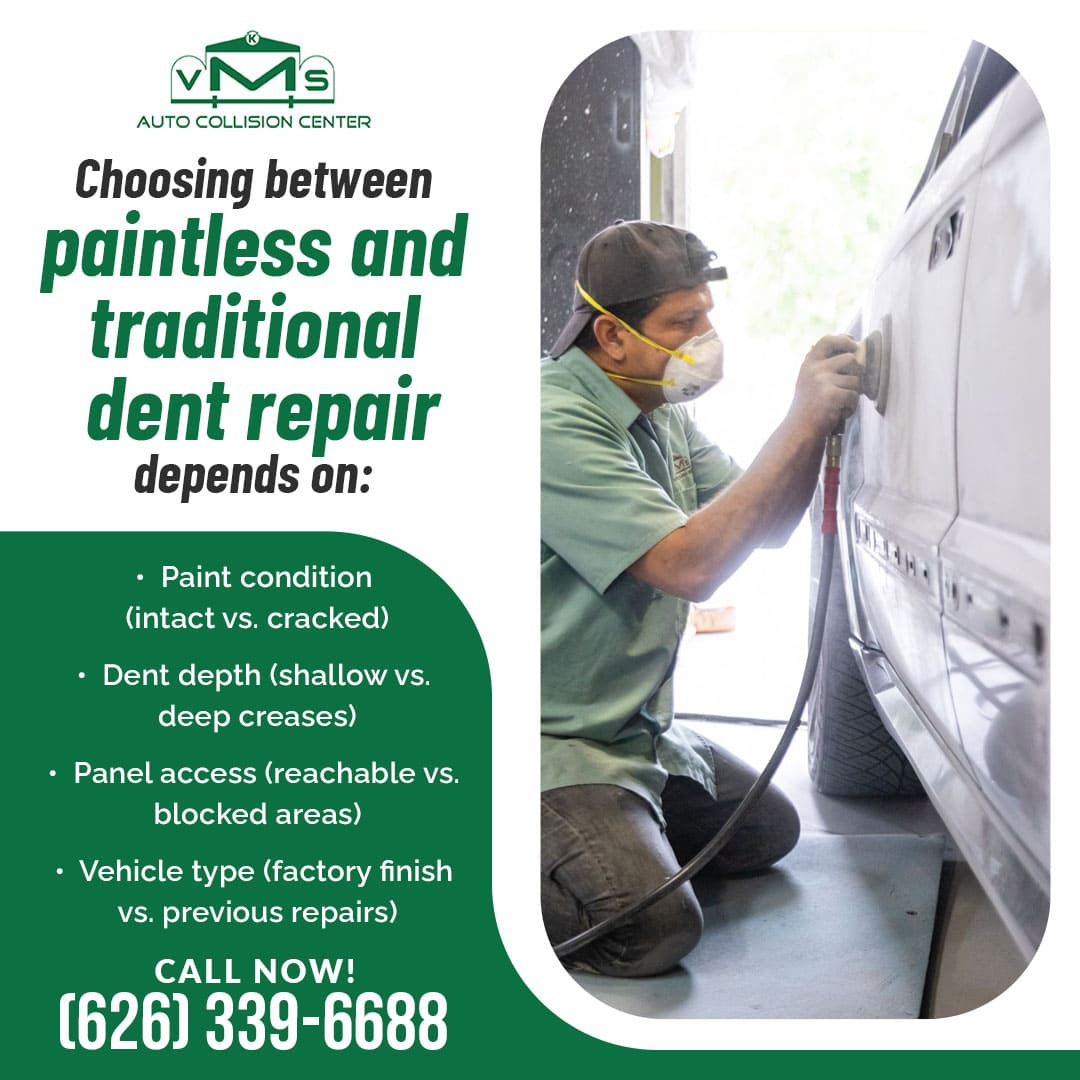
Several factors determine whether PDR or traditional repair is more appropriate:
Paint Condition
If the paint is undamaged and factory-original, PDR is preferred. Oxidized or previously refinished panels often require traditional bodywork to avoid cracking.
Dent Shape and Depth
Round, shallow dents under a quarter inch deep work best with PDR. Dents with sharp edges, stretched metal, or irregular shapes typically need filler and paint to restore smoothness and integrity.
Dent Location and Access
PDR requires tool access behind the dent. While doors and hoods allow easy entry, roof pillars or panel edges may block tool positioning, making traditional methods necessary.
Panel Material and Vehicle Type
Luxury vehicles or those with high-value factory finishes benefit from PDR to preserve original paint. However, older vehicles or those with previous bodywork may tolerate refinishing better.
Repair Timeline Differences
PDR usually requires less time, especially for single-panel damage. Simple repairs can be completed within hours. Traditional repairs take longer due to paint drying and curing times, sometimes extending over several days. Weather conditions don’t impact PDR, but traditional repairs depend on controlled environments. VMS Auto Collision Center uses climate-regulated booths to maintain consistency and finish quality.

Cost and Insurance Considerations
Dent repair cost depends on damage severity and the method used. PDR is often less expensive than traditional repair since it avoids paint and filler. Insurance covers both options under standard policies.
VMS Auto Collision Center recommends the most appropriate method based on damage, not just cost. PDR also helps preserve resale value by keeping the original paint intact, unlike traditional refinishing.
Expert Dent Repair Services in Covina
VMS Auto Collision Center offers both paintless and traditional car dent repair services to drivers across Covina, West Covina, Azusa, and surrounding areas. The facility is equipped with modern tools, experienced technicians, and certified repair processes to restore vehicles efficiently and properly. Each repair comes with a Limited Lifetime Warranty that covers workmanship for as long as the customer owns the vehicle.
Schedule a Dent Evaluation Today
Choosing the right dent repair method starts with a proper assessment. For drivers searching for quality dent repairs near them, VMS Auto Collision Center offers trusted evaluations and clear guidance. Whether it’s a minor ding or damage requiring full refinishing, their team delivers reliable results. To schedule your dent repair evaluation, call (626) 339-6688 or email info@vmsautocollision.com.
Contact Information:
VMS Auto Collision Center
1101 N Azusa Ave A1
Covina, CA 91722
United States
Kevin Kebabjian
(626) 339-6688
https://vmsautocollision.com/


Original Source: https://vmsautocollision.com/paintless-dent-repair-vs-traditional-methods-which-is-right-for-your-vehicle/