How Summer Humidity Triggers Crawlspace Moisture Issues (and How to Stop It)
Erie, United States – October 31, 2025 / ARK Basement Services /
You’ve likely noticed how humid summers can make your crawlspace a breeding ground for moisture problems. This excess moisture doesn’t just cause structural damage or spawn mold growth, it can also be a silent threat to your health and indoor air quality. Now, you’re probably wondering, how can you protect your home from these hazards? It’s through effective moisture control strategies that you can maintain a safe, dry environment. Yet, the question remains: What exactly are these strategies and how can they be implemented effectively?
Key Takeaways
- High summer humidity often exacerbates moisture problems in crawlspaces due to inadequate ventilation and soil proximity.
- Signs of moisture damage include persistent dampness, mold growth, and musty odors in the crawlspace.
- Water stains on walls or floors indicate potential drainage or leak problems that need immediate attention.
- Effective moisture control strategies include installing vapor barriers, ensuring proper ventilation, and using dehumidifiers to maintain ideal indoor humidity levels.
- Professional intervention using advanced tools can identify moisture sources and provide tailored solutions to keep the crawlspace dry and safe.
Understanding Crawlspace Moisture
 Over time, you may find that your crawlspace is exhibiting signs of excessive moisture. That damp smell is hard to ignore and can even seep into your living space.
But it’s not just about a musty odor. Excessive moisture in your crawlspace can lead to serious consequences that can affect the structural integrity of your home.
You might notice mold and mildew in your crawlspace, a clear sign of too much moisture. This can rot your wooden beams, weaken your home’s foundation, and even cause significant health issues.
You might suffer from allergies, asthma, and other respiratory problems.
Another sign is the presence of pests. High moisture levels attract bugs, rodents, and other pests that thrive in damp environments. These unwelcome guests can cause even more damage to your property.
The excessive moisture in your crawlspace doesn’t just appear. It’s often a result of certain conditions, which we’ll explore in the next section of this article.
But it’s important to remember: If you’re encountering these issues, you must act quickly. Ignoring the problem won’t make it go away. It’ll only make it worse.
Causes of Summer Humidity
As you experience the heat of summer, you might also notice an increase in your crawlspace’s humidity.
Various factors can lead to this spike, from weather conditions to your home’s construction.
It’s important to understand these causes, as well as how this increased humidity impacts your crawlspace.
Factors Increasing Humidity
Though you mightn’t realize it, a number of factors can considerably increase humidity levels in your crawlspace, particularly during the summer months. The primary culprit is often inadequate ventilation. Without proper airflow, moisture gets trapped and the humidity skyrockets.
If you’ve got vents that are too small, blocked, or poorly positioned, you’re setting up for a damp, sticky situation down there.
Your crawlspace’s proximity to the ground also plays a significant role. Moisture from the soil can easily seep into the space, especially when it’s humid outside. This is particularly true if your crawlspace isn’t properly sealed with a vapor barrier, a protective layer designed to keep moisture at bay.
High outdoor humidity is another key factor. When the air outside is saturated with moisture, it can easily infiltrate your house, including your crawlspace. This is especially likely if there are cracks or openings in the walls or foundation.
Humidity’s Impact on Crawlspace
If you’ve ever dealt with high humidity in your crawlspace during the summer, you’re probably aware of its negative effects.
It’s not just uncomfortable; it can create real problems for your home. Dampness attracts pests like termites and mold, which can deteriorate your home’s foundation and potentially impact your family’s health.
Humidity comes from warm air carrying moisture, and that’s why it’s more common during the hot summer months. When this warm, humid air enters your crawlspace, it cools down, causing the moisture to condense on your crawlspace’s surfaces.
This process effectively turns your crawlspace into a breeding ground for dampness-related issues. The more humid the air, the more moisture it will produce when it cools.
This is why, during summer, your crawlspace can face severe moisture problems. It’s this constant cycle of humid air creating more moisture that can lead to a raft of issues, from structural damage to health concerns.
Understanding the causes of humidity in your crawlspace is the first step toward preventing its damaging effects.
Impact of Moisture on Homes
Unchecked moisture can wreak havoc in your home. It’s not just an annoyance; it can lead to serious issues affecting your home’s structural integrity and your health.
Moisture can seep into your home’s foundations, gradually weakening them. Over time, this can cause your home to shift, leading to cracks in the walls and uneven floors. It’s not a quick process, but it’s a persistent one.
But it’s not just the physical structure that’s at risk. Moisture can also lead to the growth of mold and mildew. These fungi thrive in damp, humid conditions and can quickly spread throughout your home. This doesn’t just look bad; it can cause a range of health issues, particularly respiratory problems.
Consider the potential impacts of unchecked moisture:
- Structural damage to your home’s foundation
- The growth of mold and mildew, which can cause health problems
- Damage to personal belongings, such as furniture, clothing, and important documents
- Increased energy costs due to the need for additional heating or cooling
Don’t underestimate the power of moisture. It’s not a problem to be ignored, but rather one to be tackled head-on.
Recognizing Signs of Moisture Damage
You’re on the right track to safeguard your home by understanding crawlspace moisture issues.
Now, let’s move on to spotting signs of damage. Keep an eye out for water stains and mold growth – these are clear indicators that moisture is wreaking havoc in your crawlspace.
Identifying Water Stains
Over time, water stains can become a clear indicator of moisture damage in your crawlspace. These stains are often overlooked or misinterpreted, but they’re telling you something important – your crawlspace has a moisture problem.
Water stains may appear as patches of discoloration on your crawlspace walls or floor. They’re typically brownish or yellowish and can vary in size. The stains might seem harmless, but they’re a sign that water has been or is currently present in your crawlspace.
Ignoring these signs can lead to more severe problems down the line, like structural damage and mold growth. But, don’t panic yet! Identifying water stains is the first step towards solving your crawlspace moisture problem.
Here’s what you should look for:
- Discoloration: Look for areas where the color differs from the surrounding material.
- Rings: Water stains often leave a ‘ring’ effect around the stain, similar to a coffee spill on paper.
- Location: Stains near the floor might indicate rising damp; stains higher up could point to leaks.
- Changes: Keep an eye on the stains. If they’re growing or changing, the water issue is ongoing.
Detecting Mold Growth
Spotting mold growth in your crawlspace is a surefire sign of moisture damage. It’s not something you should ignore. Mold proliferates in damp, dark areas, so a crawlspace with excess moisture is a prime breeding ground.
You might think you’d smell the musty odor of mold right away, but it’s not always that simple. Sometimes, mold hides behind walls or under insulation, out of sight and smell. So, how do you detect it?
First, you’ve got to get down and dirty. Don a mask and gloves, then grab a flashlight. You’re looking for discolored patches, usually black, white, or green, on the wood or insulation. You might also see a fuzzy or slimy texture.
Second, trust your nose. Even hidden mold often gives off a musty, damp smell. If you’re picking up that scent, there’s a good chance mold’s lurking somewhere.
Third, consider a professional mold test. It’s more accurate and can identify the type of mold, which can help determine the best way to remove it.
Effective Moisture Control Strategies
Controlling moisture in your crawlspace isn’t just desirable, it’s vital. Left untreated, excess moisture can lead to a range of problems, from mold growth to structural damage. Here are some strategies you can use to effectively control moisture.
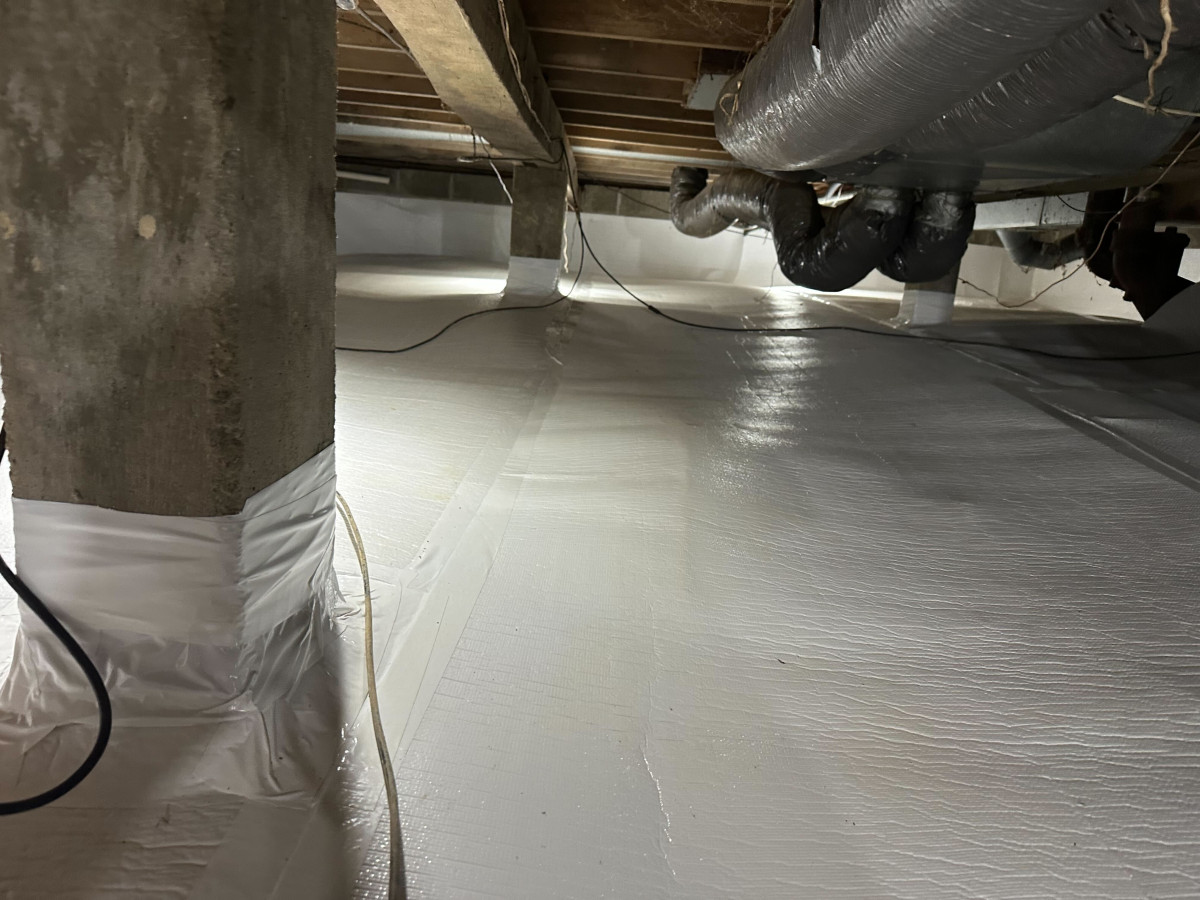
First, consider installing a vapor barrier. This thin layer of plastic or foil sheeting can prevent ground moisture from seeping into your crawlspace. It’s not a complicated process, but it’s important to cover the entire space, including walls.
Next, make sure your crawlspace is well-ventilated. Proper ventilation allows damp air to escape and dry air to circulate. However, in humid climates, too much ventilation can bring in more moisture, so balance is key.
Proper drainage is also a must. Water should always be redirected away from your home’s foundation.
Consider the following:
- Gutters and downspouts should be cleaned regularly to prevent overflow.
- The landscape around your home should slope away from the foundation.
- Inspect for any plumbing leaks in or near the crawlspace.
- Use a dehumidifier if necessary, to help maintain a suitable humidity level.
 Professional Solutions for Moisture Problems
While you can put several effective strategies into play to control moisture in your crawlspace, some situations may call for professional intervention. If you’re dealing with persistent dampness, mold growth, or structural damage, it’s time to call in the experts.
These professionals have the equipment, knowledge, and experience to diagnose, treat, and prevent moisture problems.
Firstly, they’ll conduct a thorough inspection to identify the root cause of the problem. They’ll look for signs of water intrusion, poor ventilation, or inadequate insulation.
Once they’ve pinpointed the issue, they’ll propose a tailored solution. This could involve installing a vapor barrier, improving ventilation, or using a dehumidifier.
Next, they’ll implement the solution and monitor the results. They’ll guarantee the moisture levels decrease and stay within the acceptable range. Their job isn’t done until your crawlspace is dry and safe.
Conclusion
Don’t let crawlspace moisture ruin your summer! High humidity can damage your home, promote mold growth, and create unpleasant smells. Look for signs like water stains or constant dampness. It’s vital to tackle these issues head-on with effective strategies like proper ventilation and vapor barriers. If you’re unsure, turn to a professional for help. Remember, a dry and safe home is a happy home!

Contact Information:
ARK Basement Services
4208 Harding Drive
Erie, PA 16509
United States
Mike Perry
(866) 939-2837
https://www.arkbasementservices.com/