

Key Takeaways
- A comfortable pedal stroke starts with a seat set close to hipbone height, then fine-tuned until the knee has a slight bend instead of locking at the bottom of each stroke
- Checking fore-aft seat distance with the pedals in a horizontal position helps confirm the front knee lines up roughly over the middle of the pedal, reducing unnecessary joint stress
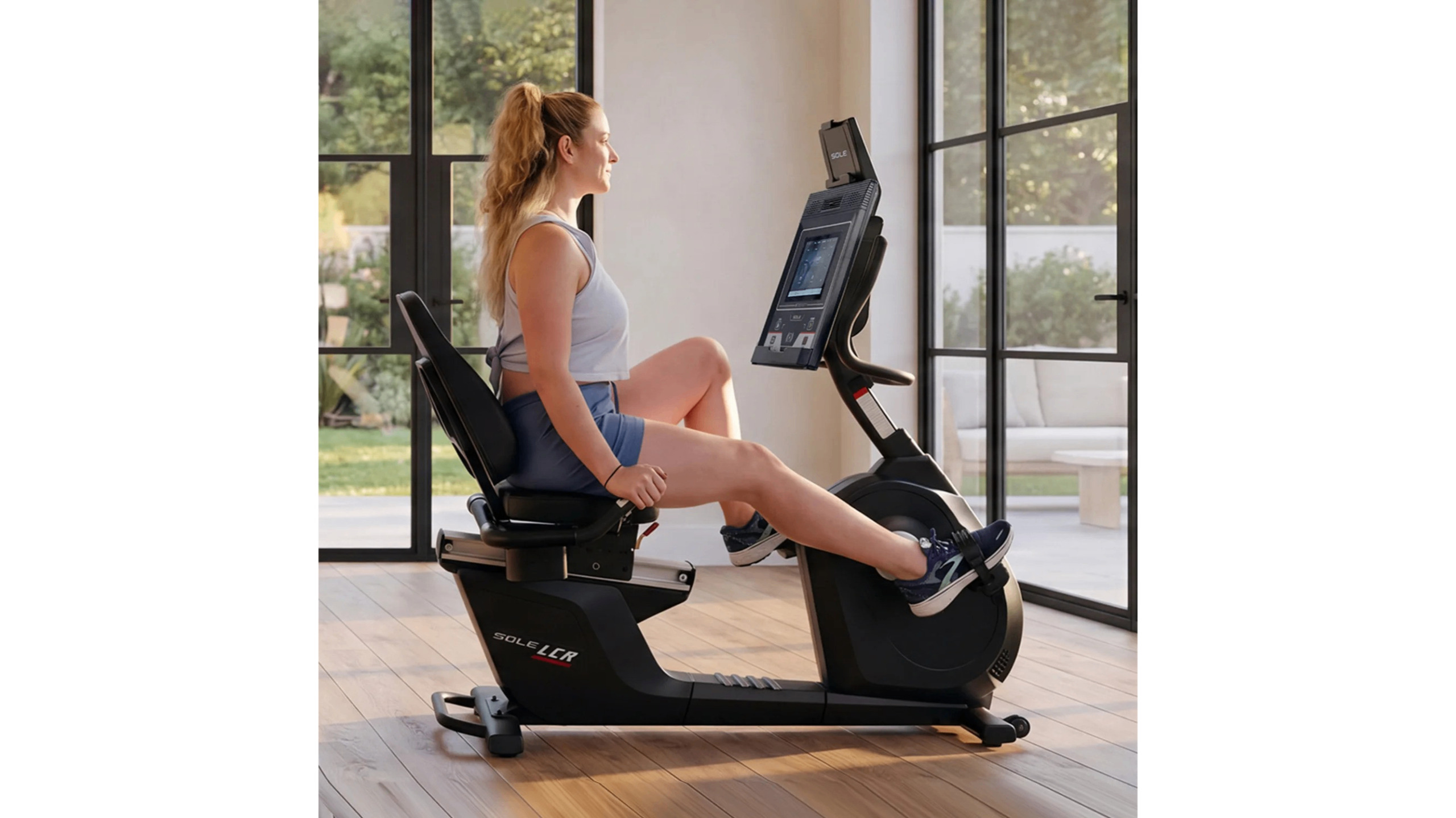
- On recumbent bikes, sliding the seat for proper leg reach lets each household member avoid overreaching or feeling cramped during a workout
- SOLE Fitness explains that some recumbent bikes offer multiple seat adjustments to accommodate multiple riders – find more expert insights below
Choosing a stationary bike for a household with more than one rider means thinking past horsepower and screen size. The real test of a good bike is whether a six-foot teenager and a five-foot-two parent can both climb on, adjust the seat in seconds, and pedal without knee pain.
Seat adjustability is the quiet feature that makes shared equipment actually work for everyone who uses it.
Why Your Knee Decides Seat Height
The knee joint is the single best indicator of whether a bike seat is positioned correctly. Bike fit is individual, so general setup guidelines may need adjusting to what feels comfortable for each rider, but the knee still gives the clearest feedback. Set the seat too high, and the hips rock side to side trying to reach the pedals. Set it too low, and the knees might bend sharply or splay outward with every rotation, both of which can contribute to discomfort over time.
Because height and leg length vary so much within a single household, a seat locked into one position rarely works for everyone. A parent, a teenager, and a grandparent sharing the same bike each need a slightly different setup to protect their knees and get a smooth, efficient pedal stroke. That is why adjustability matters so much for shared equipment.
Finding Your Starting Seat Height
Getting the seat height right is a two-step process: find a reasonable starting point, then confirm it feels right once pedaling begins.
A Hipbone-Level Check Before You Climb On
A common starting point for seat height is level with the hipbone when standing beside the bike. Feel for the rounded bone at the front of the hip and adjust the seat so it sits roughly at that height. This simple check takes just a few seconds and gets most riders close enough to begin fine-tuning once they’re pedaling.
Confirming a Slight Knee Bend, Not a Lock
Once seated, the real test happens at the bottom of the pedal stroke, where the knee should have a slight bend rather than locking straight. A seat that is too high or too low can contribute to knee discomfort, so it’s worth pedaling slowly for a few rotations and paying attention to how the knee feels at its most extended point. If the hips start rocking to reach the pedal, the seat is likely too high; if the knee stays sharply bent, lowering it slightly in small increments usually solves the problem.
Dialing In Fore-Aft Seat Distance
Seat height solves half the puzzle. The other half is how far forward or back the seat sits relative to the pedals, which affects how the legs and hips work together through each stroke.
The Horizontal-Pedal Knee Test
To check seat distance on an upright bike, position the pedals horizontally and assess whether the forward knee lines up roughly above the middle of the pedal. Picture a straight line running down from the knee to the pedal spindle: if that line falls noticeably in front of or behind the spindle, small forward or backward adjustments to the seat can bring it back into alignment.
Signs the Seat Sits Too Far Forward or Back
A seat positioned too far forward or backward can add unnecessary joint stress and limit use of muscles such as the glutes. A seat set too far forward tends to place extra pressure on the knees, while one set too far back can shift stress toward the heels. Riders who notice nagging knee or heel discomfort after a ride, despite having the height dialed in, often find the fix lies in this fore-aft adjustment rather than in height at all.
Recumbent Seats and Shared Households
Recumbent bikes work a little differently than upright models, since the seat slides along a rail rather than moving up and down. For households with a wide range of heights, this horizontal sliding motion is often the easiest adjustment to make between riders.
Sliding the Seat for Leg Reach, Not Overreach
On a recumbent bike, moving the seat forward or backward helps each rider adjust leg reach so they can pedal without overreaching. A practical way to check this is to place a heel on the farthest pedal and slide the seat until the leg is almost straight with the knee still slightly bent, then return the foot to its normal pedaling position using the ball of the foot. Riders with different leg lengths can use this same seat repositioning each time they switch users, adjusting how far they need to reach so nobody feels cramped or overstretched.
Why Backrest Support Matters Too
Seat distance isn’t the only comfort factor on a recumbent bike. Sitting back against the backrest, rather than perching forward, allows the lower back to get the support it needs throughout a longer ride. Riders who lean forward away from the backrest often lose some of that support and may notice more fatigue in the lower back by the end of a workout, so settling in fully against the seat back is worth building into the setup routine alongside the leg-reach check.
How Recumbent Bikes Are Built for Multiple Riders
Recumbent bikes designed with household use in mind typically build in a wider range of seat adjustment than models meant for a single rider.
A wide adjustment range matters most in households where height differences are significant, since a narrow range might fit two similarly sized adults but leave a shorter or taller family member stuck with an awkward position. Checking the inseam range listed for any recumbent bike against the shortest and tallest riders in the household is a practical step before buying, since it helps confirm the bike can actually serve everyone who plans to use it.
Adjustability Is the Real Comfort Feature
Screens, resistance levels, and workout programs tend to get the spotlight when shopping for a stationary bike, but none of those features matter much if the seat position leaves a rider’s knees aching. Adjustability turns a single bike into equipment the whole household can share, letting each person dial in a position that lets them pedal comfortably without locking or over-bending the knee.
Testing seat height, fore-aft distance, and backrest support before settling into a regular routine pays off in fewer aches and more consistent use. For households comparing options, SOLE Fitness has more resources noting the importance of looking at recumbent bike seat adjustment range as one of the most practical ways to judge whether a bike will truly fit everyone who plans to ride it.
SOLE Fitness
56 Exchange Pl.
Salt Lake City
UT
84111
United States