- Affordable, global-reach, Group 5 swarming strike and sensing aircraft has a ~72 foot wingspan and is designed for highly-efficient cruise and loiter missions with an unrefueled range of 9,000 nautical miles.
- Built with a novel manufacturing approach, Gamera lowers cost relative to legacy Group 5 UAS and crewed aircraft. Gamera delivers comparable standoff long-range strike effects for 10X lower cost-per-effect of existing platforms.
- The aircraft has over 2,800lbs of payload capacity and is the first UAS designed to employ bomber-class strike munitions such as LRASM/JASSM-ER missiles. Gamera’s large payload capacity enables it to deliver all of the capabilities of the MQ-9, as well as employ payloads the MQ-9 cannot.
- U.S. Air Force is moving forward with a Massed Modular Aircraft (MMA) program; Swarm has been designing and building Gamera since the company’s founding in 2022 to provide the low-cost persistent strike and sensing that the MMA program is seeking. Gamera’s unique combination of low-cost, large-payload, and long-range does not exist in any other UAS and will transform global power projection operations.
- Swarm has matured its Legion command-and-control (C2) and autonomy software through multiple instances of successful, competitive contract performance. Legion orchestrates multi-domain, heterogeneous UXS in full end-to-end kinetic effect delivery and operates internationally in real-world operations.
OXNARD, Calif., Sept. 14, 2026 (GLOBE NEWSWIRE) — Today at the Air & Space Forces Association’s Air, Space & Cyber Conference 2026, Swarm Aero (Swarm), a developer of large uncrewed aircraft systems (UAS) swarms, unveiled Gamera, which introduces a new category of Group 5 strike and sensing UAS. Leveraging years of focused design, prototyping, and operational analysis, Gamera brings forward a clean sheet aircraft that is mass-producible and significantly lower cost than legacy platforms. Gamera is the first UAS specifically designed to employ heavyweight, long-range missile payloads including LRASM/JASSM-ER and has global range. Gamera can deliver standoff long-range strike effects at 10X lower cost-per-effect. Swarms of Gamera can operate organically and will complement existing and planned force structure, making the force more capable, survivable, and effective, renewing U.S. dominance of the skies.
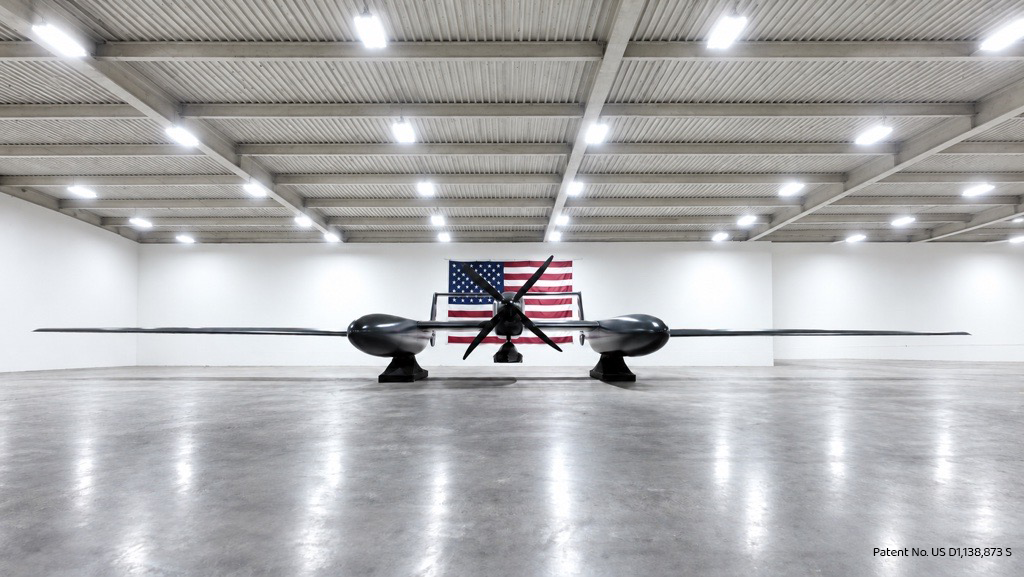
Gamera is designed around a unique, proprietary design and manufacturing approach that enables significant cost savings. Swarms of these Group 5 UAS will give the U.S. Air Force a cost-effective force structure option for surface strike, sensing, electronic warfare, communications relay, and other missions. Gamera’s global reach of 9,000 nautical miles enables persistent presence to fill the gaps between “pulsing” forces. Gamera’s unique combination of low-cost, large-payload, and long-range does not exist in any other UAS and will transform global power projection operations.
Generational Transformation Brought About by Massed Modular Aircraft (MMA)
Two years ago, prior U.S. Air Force leadership shifted their expectations from owning the skies to creating limited windows of opportunity through pulsing in force packages of expensive and primarily piloted aircraft into a defended environment. Air Force Chief of Staff General David Allvin in 2024 stated that, “It’s cost prohibitive to…have air superiority for days and weeks on end.” And U.S. Air Forces in Europe – Air Forces Africa Commander Gen. James Hecker, in 2024 also emphasized that “air superiority may come in pulses.” The Defense Innovation Unit’s (DIU) recent statements underline this: “The Joint Force’s reliance on low-density, high-value ‘exquisite’ (>$30 million) manned and unmanned aircraft is unsustainable against adversaries utilizing layered defenses enabled by increasingly low-cost antiaircraft capabilities.”
Recently, under the leadership of Lt. Gen. Christopher Niemi, Lt. Gen. Luke Cropsey, Maj. Gen. Joseph Kunkel and others, the U.S. Air Force and DIU have announced a new program for Massed Modular Aircraft (MMA) that promises to reverse this unsustainable approach to power projection and replace the prior generation of sensing UAS. The U.S. Air Force is asking for MMA aircraft that are “risk-tolerant”, “designed for affordable, high-rate manufacture, and minimized total ownership cost.” Modular and “capable of long-range payload delivery”, MMA are also required to “execute missions that the MQ-9A performs today.” MMA stands in contrast to legacy approaches, creating an option that uses low-cost, large-payload, and “theater-range” to ensure “a persistent overwhelming credible threat despite inevitable attrition” and “relentless pressure [that] will exhaust the adversary, forcing them to burn through expensive anti-aircraft missiles and resources faster than they can be replaced.”
Since 2022, Swarm has continuously invested $10s of millions into Gamera’s design, manufacturing approach, and prototyping. This investment is based on first-principles analysis of the operational environment and confidence that the U.S. Air Force would expand its approach to large UAS to support low-cost, theater-range strike UAS for persistent strike and sensing at scale. Gamera is well positioned to support the generational transformation the Air Force is advancing with MMA.
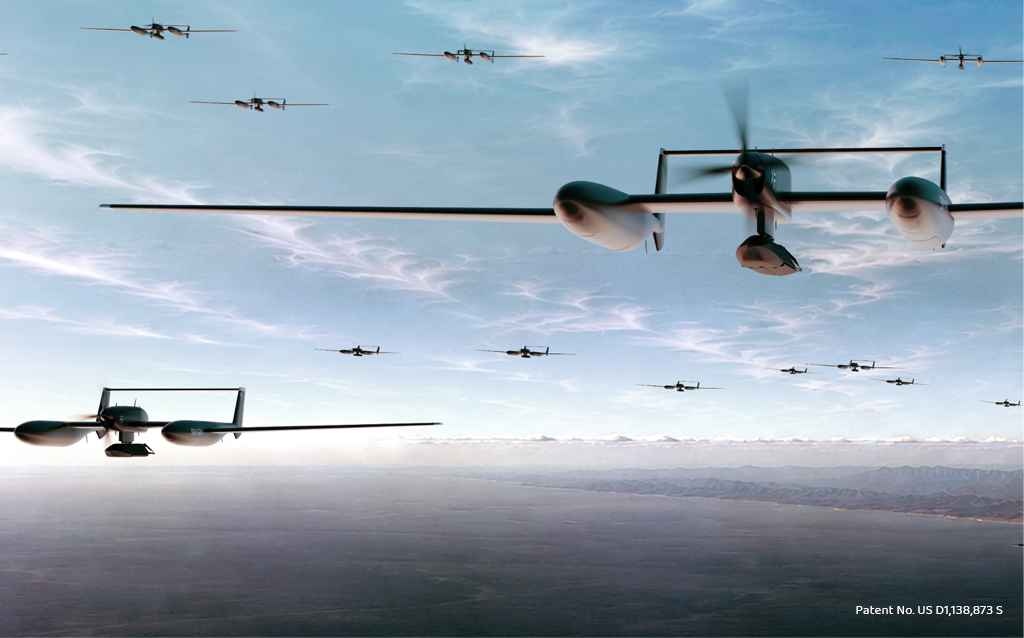
“The next few decades will see a continuous contest with China over global power projection, first focused near China over Taiwan, over time extending globally. The PLA has built asymmetric ways to challenge our legacy force structure. We cannot continue to pursue incremental improvements in legacy approaches and hope to protect U.S. interests and deter PRC coercion of our allies and partners,” said Oliver Palmer, Chief Revenue Officer and co-founder, Swarm Aero and former Pentagon official covering China and Taiwan strategy. “At Swarm we’ve inverted conventional wisdom around air power platform design, manufacturing, and combat operations and introduced an affordable, mass-producible strike platform that will re-establish an asymmetric edge over our adversaries.”
Gamera’s Uniquely Large, Modular Capacity Sets It Apart from Existing Group 5 UAS
Gamera’s large payload capacity of over 2,800 lbs across seven available store locations and its high degree of modularity ensure that it can carry air-to-air, air-to-surface, or sensing payloads. It is a highly capable strike platform, able to carry LRASM or JASSM-ER strike munitions as well as multiple of various classes of new low-cost cruise and hypersonic missiles. Gamera will be able to deliver all of the capabilities of the MQ-9, as well as employ payloads that the MQ-9 cannot, at a fraction of the price. Gamera’s lower cost will enable the U.S. and partner nations to afford expanded capacity for sensing, maritime domain awareness, and many other civil and commercial applications.
Swarm is growing quickly, supporting $10s of millions in government contracts. “The team at Swarm holds world-records for the design and build of long-endurance aircraft and has the pedigree of moving quickly in taking innovative aircraft from concept to flight. We have the first-principles orientation and technical expertise in both novel aircraft and in volume producing military aircraft to deliver Gamera at scale,” said Peter Kalogiannis, CEO and co-founder of Swarm.
Gamera’s multi-role design is paired with Swarm’s “Legion” command and control (C2) and autonomy system, which orchestrates multi-domain autonomous systems today, including in real-world international operations. Legion enables a single operator or small team to control dozens of heterogeneous, multi-domain uncrewed systems all in the same environment. Legion represents a deliberate break from the remotely-piloted past. It has a proven track record as a top-performing unmanned systems software, having been selected by the DIU as one of three companies to provide C2 software for the Autonomous Collaborative Teaming program supporting DOW’s Replicator efforts to scale operations of 1,000s of drones.
About Swarm
Swarm Aero was founded in 2022 and is headquartered in Oxnard, CA with locations in Spokane, WA, Fayetteville, AR, and Washington D.C.. The team has extraordinary experience working with the Department of War to fulfill critical needs and requirements as well as decades of aerospace accomplishments across Scaled Composites, Blue Origin, Northrop Grumman, Boeing, Airbus, Archer, and others. The team has previously completed billions of dollars in contracts involving DOW, has built software platforms supporting billions of users, and employed cutting-edge AI in critical applications. Swarm is backed by leading venture firms including Deviation Capital, Silent Ventures, Khosla Ventures, Construct Capital, Coatue, MaC Venture Capital, a16z, and Founders Fund. To learn more please visit: https://www.swarm.aero/
Media Contact
Kate Gundry
swarm@pluckpr.com
617-797-5174
Photos accompanying this announcement are available at:
https://www.globenewswire.com/NewsRoom/AttachmentNg/5d2c4527-584c-49d1-8edb-bc56905e6dbf
https://www.globenewswire.com/NewsRoom/AttachmentNg/71121f85-5748-45ea-bf10-da4945601b24
https://www.globenewswire.com/NewsRoom/AttachmentNg/30eeeb15-a57f-461b-8b0f-e56e8b477450
A video accompanying this announcement is available at:
https://www.globenewswire.com/NewsRoom/AttachmentNg/0d11ebc3-9b75-44dd-8d12-24a07859b821